
A zoom lens is one of the most important innovations in photography and modern smartphone cameras. It gives users the ability to change how close or far a subject appears without physically moving the camera. This flexibility is what makes zoom lenses essential for everything from professional wildlife photography to casual mobile snapshots.
In today’s smartphone era, zoom technology has become a major selling point. Terms like optical zoom lens for mobile, 100x zoom lens for mobile, and hybrid zoom are now commonly used in marketing. However, not all zoom types work the same way, and understanding the difference is important before choosing a camera or smartphone.
This guide explains zoom lenses in detail, how they work, their types, and the reality behind high zoom numbers like 100x.
Table of Contents
What Is a Zoom Lens?
Understanding the Basic Concept
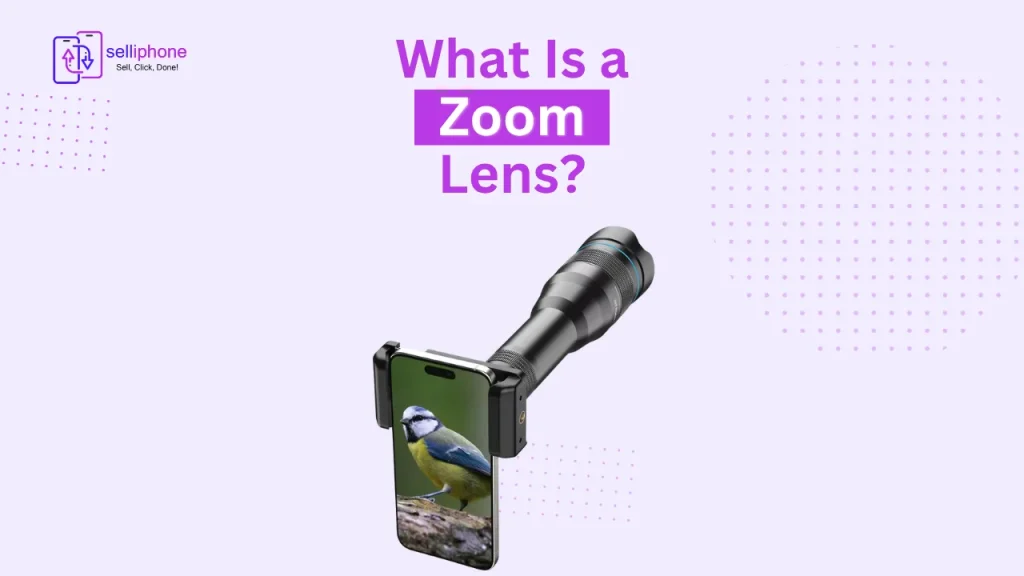
A zoom lens is a camera lens that allows you to change its focal length, meaning you can adjust how much of a scene you capture and how close your subject appears. Unlike a fixed prime lens, a zoom lens covers multiple focal lengths in a single unit.
This means instead of changing lenses, you simply rotate a ring on a camera or tap zoom controls on a smartphone. The lens adjusts internally, giving you a different perspective instantly.
Why It Matters in Photography
The biggest advantage of a zoom lens is convenience and flexibility. A photographer can shoot a wide landscape, then immediately zoom into a distant subject without moving position or changing equipment. This is especially useful in fast-paced environments like sports, events, or wildlife photography.
How a Zoom Lens Works
Internal Movement of Glass Elements
A zoom lens works through a system of moving glass elements inside the lens barrel. When you zoom in or out, these elements shift positions, changing the focal length and angle of view. This mechanical adjustment is what allows real optical zoom to happen.
Understanding Zoom Range
Every zoom lens has a range, such as 18–55mm or 70–200mm. This range defines how wide or how close the lens can go. A higher range means more flexibility, while a lower range usually means better image consistency and sharpness.
The zoom ratio (for example 10x or 20x) represents how much the lens can magnify between its minimum and maximum focal length.
Types of Zoom Lenses
Optical Zoom Lens
Optical zoom is the highest-quality type of zoom because it physically changes the focal length using real lens movement. This ensures that image quality remains sharp and detailed even when zoomed in.
In smartphones, optical zoom is achieved using telephoto or periscope lens systems. These lenses allow true magnification without degrading image quality, which is why optical zoom is considered the “real zoom” in photography.
Digital Zoom
Digital zoom works differently. Instead of physically zooming in, the camera crops into the image and enlarges it using software. While this may make the subject appear closer, it often reduces image quality, especially at higher zoom levels.
The more you use digital zoom, the more you lose fine details, resulting in pixelated or soft images.
Hybrid Zoom
Hybrid zoom is a combination of optical zoom, digital zoom, and artificial intelligence processing. Smartphones use this method to extend zoom capabilities beyond what optical hardware alone can achieve.
This is why modern phones advertise very high zoom numbers like 30x, 50x, or even 100x. In reality, only a small portion of that range is true optical zoom, while the rest is enhanced digitally.
Optical Zoom Lens for Mobile
How Smartphones Achieve Zoom
Smartphones do not have space for large traditional zoom lenses like DSLRs. Instead, they use multiple cameras with different focal lengths. These typically include a wide lens, an ultra-wide lens, and a telephoto lens.
When you zoom in, the phone switches between these lenses or blends their data to simulate smooth zoom transitions.
Realistic Optical Zoom Limits
Most smartphones offer between 2x and 5x true optical zoom. Premium devices with periscope technology may go slightly higher, but anything beyond that is usually assisted by software.
This means that even though you may see large zoom numbers in specifications, only a small part of it is physically optical.
What Is a 100x Optical Zoom Lens?
The Reality Behind the Term
The term “100x optical zoom lens” is often misleading. In most cases, there is no smartphone that provides 100x true optical zoom. Instead, this figure represents a combination of optical, digital, and AI-enhanced zoom.
True optical zoom in smartphones rarely exceeds 10x, even in high-end models.
What 100x Zoom Is Actually Used For
At extreme zoom levels, such as 100x, the camera is mostly relying on digital processing. These high zoom levels are useful for capturing very distant objects like buildings, signs, or the moon, but they are not designed for professional image clarity.
The results can vary depending on lighting conditions, stability, and device quality.
100x Zoom Lens for Mobile: Marketing vs Reality
Why Companies Advertise High Zoom Numbers
Smartphone manufacturers use high zoom numbers as a marketing strategy because they attract attention. A “100x zoom” feature sounds powerful, even if most of it is not optical.
What You Actually Get in Practice
In real-world use, low zoom levels (up to 5x or 10x) provide the best quality. Mid-range zoom levels (10x to 30x) are usable but show some loss of detail. Extreme zoom levels (50x to 100x) are heavily processed and often require stabilization for acceptable results.
So while the feature is impressive, it should be understood more as a hybrid capability rather than true optical magnification.
Zoom Lens vs Prime Lens
Flexibility vs Image Quality
A zoom lens offers flexibility because it covers multiple focal lengths in one lens. This makes it ideal for situations where you cannot change lenses quickly or move closer to your subject.
A prime lens, on the other hand, has a fixed focal length but usually delivers sharper images, better low-light performance, and higher optical quality.
When Each One Is Better
Zoom lenses are preferred for travel, events, and general photography because they are versatile. Prime lenses are preferred for portraits, studio work, and low-light photography where image quality is more important than flexibility.
Advantages of Zoom Lenses
Zoom lenses are widely used because they simplify photography. Instead of carrying multiple lenses, one zoom lens can handle different shooting situations. They are especially useful in dynamic environments like sports, wildlife, and travel photography.
For smartphone users, zoom lenses make it possible to capture distant objects without additional equipment.
Limitations of Zoom Lenses
Despite their advantages, zoom lenses do have limitations. They can be more expensive, slightly less sharp than prime lenses at extreme focal lengths, and in smartphones, high zoom levels often depend heavily on digital processing rather than real optics.
At very high zoom levels, image stability also becomes a major issue.
How to Choose the Right Zoom Lens
Understanding Your Needs
Choosing the right zoom capability depends on how you plan to use it. Casual users may only need basic optical zoom, while photography enthusiasts may prefer higher zoom ranges for more creative control.
Key Considerations
The most important factors include optical zoom range, image stabilization, and overall camera quality. In smartphones, it is also important to check how much of the advertised zoom is optical versus digital.
Future of Zoom Lens Technology
Zoom lens technology continues to evolve rapidly, especially in smartphones. New innovations like periscope lenses, AI-powered zoom enhancement, and continuous optical zoom systems are pushing the limits of mobile photography.
In the future, we may see smartphones achieving near-DSLR-level zoom quality without the need for bulky camera equipment.
Conclusion
A zoom lens is a powerful tool that enhances the way we capture images, whether in professional cameras or smartphones. It allows flexibility, creativity, and access to subjects that would otherwise be out of reach.
However, it is important to understand the difference between optical, digital, and hybrid zoom. Features like 100x zoom lens for mobile are impressive but should be viewed realistically, as only a small portion of that range is true optical zoom.
In simple terms, optical zoom delivers real quality, digital zoom extends reach with compromises, and hybrid zoom combines both for modern smartphone photography.
FAQs
What is a zoom lens in simple words?
A zoom lens is a camera lens that lets you change how close or far your subject appears without physically moving the camera. It works by adjusting the focal length, giving you flexibility to shoot wide or close-up scenes using the same lens.
What is the difference between optical and digital zoom?
Optical zoom is real zoom achieved by physically moving lens elements, which keeps image quality sharp. Digital zoom is software-based; it simply crops and enlarges the image, which often reduces detail and clarity.
Is a 100x zoom lens for mobile really optical?
No, a true 100x optical zoom does not exist in smartphones. The 100x zoom lens for mobile feature is usually a combination of optical zoom, digital zoom, and AI enhancement. Only a small portion of it is actual optical zoom.
What is optical zoom lens for mobile phones?
An optical zoom lens for mobile uses real hardware (like telephoto or periscope lenses) to magnify the subject without losing image quality. Most smartphones offer around 2x to 10x optical zoom depending on the device.
Is zoom lens better than prime lens?
It depends on usage. A zoom lens is better for flexibility because it covers multiple focal lengths. A prime lens is better for image quality, sharpness, and low-light performance because it has a fixed focal length.